2026年5月26日 · 3分で読めます
Shopify商品画像の自動最適化ガイド(2026年版)
Auto-Pilotで、Shopifyに追加した新しい商品画像を自動で最適化。Semi-AutoとFull Autoの違い、1日の上限、Webhook、確認してから同期するフローを解説します。
Every new SKU you add is another chance to ship heavy JPEGs and blank alt text. Shopify auto optimize new product images sounds like a dream until an app overwrites your catalog without asking. Pixly Auto-Pilot watches new products and queues optimization, with modes that keep you in control.
This guide explains Semi-Auto vs Full Auto, plan limits, and how Auto-Pilot fits the review-first pipeline.
What Auto-Pilot does
When enabled on a connected store, Auto-Pilot:
- Detects new or updated products via Shopify webhooks
- Queues product media for the Pixly pipeline (alt text, WebP, square crop, filenames)
- Runs analysis based on your mode (Semi-Auto or Full Auto)
- Syncs only according to your approval rules
Auto-Pilot focuses on product media, not theme banners or collection hero art.
Semi-Auto vs Full Auto
| Mode | Behavior | Best for |
|---|---|---|
| Semi-Auto | Processes new products; you review and approve before sync | Most merchants starting out |
| Full Auto | Processes and syncs without per-image review (Scale plan) | High-volume stores with trusted presets |
Default Pixly workflow keeps review before sync unless you explicitly enable full automation on eligible plans.
Enable Auto-Pilot in Pixly
Open Auto-Pilot from the Pixly nav on a connected store:
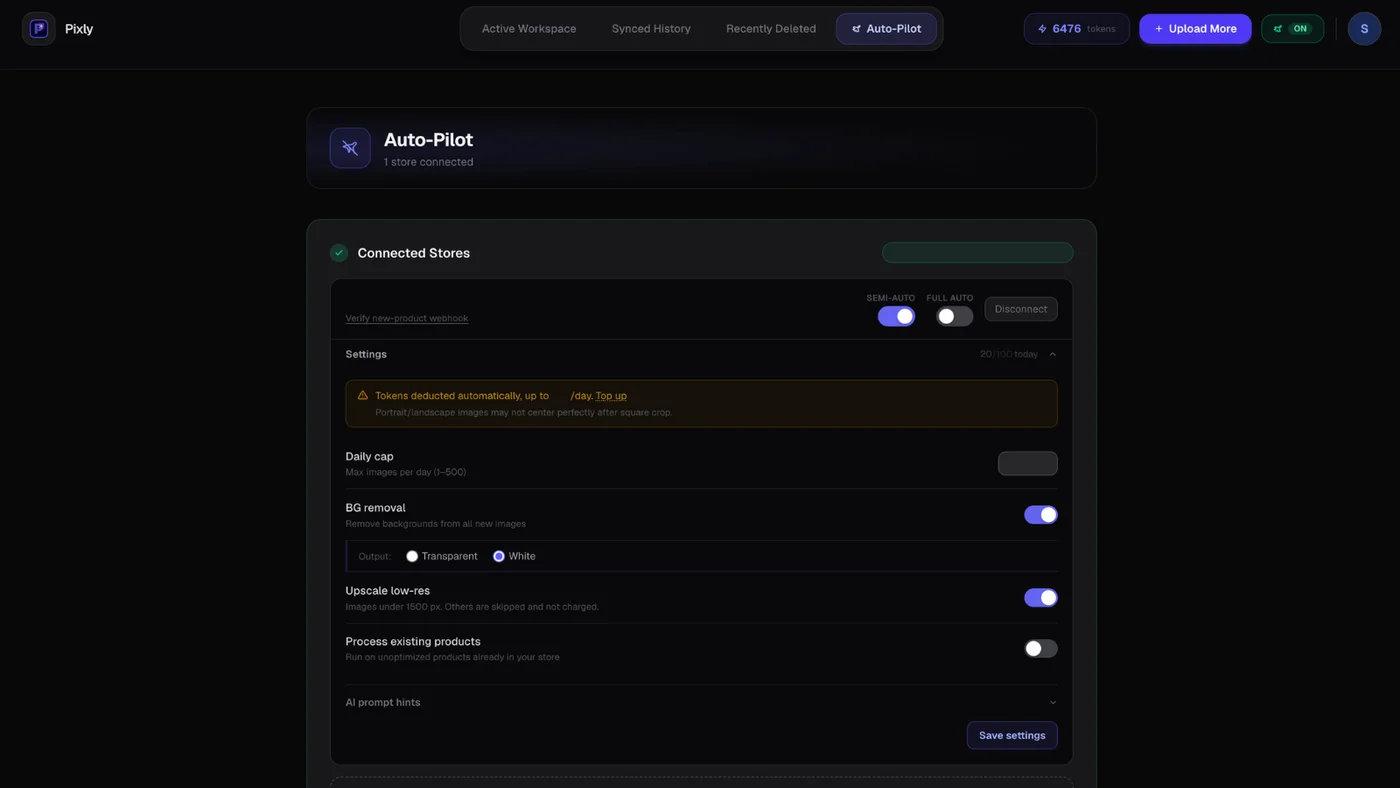
- Choose Semi-Auto or Full Auto (plan-dependent).
- Confirm the store webhook is connected (Pixly handles this on install).
- Add a new test product in Shopify with at least one image.
- Watch the job appear in Pixly workspace or suggested queue.
- Review output before sync on Semi-Auto.
Daily limits by plan
Auto-Pilot requires a Growth or Scale plan. It respects token budgets and daily caps on your tier. See Pixly pricing for current limits.
If you hit the cap, new products queue for the next window rather than failing silently.
Auto-Pilot vs manual upload
| Workflow | Trigger | Control |
|---|---|---|
| Manual upload | You drag files or import catalog | Full per-batch review |
| Store Audit | You scan existing catalog gaps (Starter and above) | Prioritized backlog |
| Auto-Pilot | New product in Shopify | Ongoing, mode-dependent review |
Use Auto-Pilot so new products never ship unoptimized. Run Store Audit once (Starter and above) to fix historical gaps.
What Auto-Pilot optimizes
On each approved image (defaults):
- WebP conversion (on by default)
- 1:1 center crop at 2000 × 2000 px (2048 when upscale approved)
- AI alt text from visual analysis
- SEO filename proposal
- Optional AI upscale when low-res alert triggers (your approval, +4 tokens)
Nothing replaces your originals in Shopify until sync completes.
Setup checklist
- Connect Shopify store via OAuth (no password stored)
- Enable Auto-Pilot mode on Growth+ plan if required
- Run a test product with Semi-Auto first
- Confirm sync in Sync history

Got questions?
Frequently asked
Shopify CDN optimizes delivery but does not write alt text, rename files, or batch-convert your catalog. Auto-Pilot apps like Pixly handle product media optimization on new SKUs.
New products are processed automatically, but you approve images before they sync to Shopify.
On eligible plans, Full Auto can sync without per-image approval. Enable only when you trust your presets.
Auto-Pilot targets new and updated products. Use Store Audit or manual import for existing catalog gaps.
Pixly works on copies; you approve before sync on Semi-Auto. Soft-deleted images can be recovered within 14 days.
Bottom line
Shopify auto optimize new product images should not mean blind overwrite. Auto-Pilot queues new SKUs through the same pipeline as manual uploads, with Semi-Auto keeping review in the loop.
Install Pixly on Shopify and enable Auto-Pilot on your test store first.
商品写真、きれいに整えませんか?
1分クイズでぴったりのプランをチェック。もちろん無料スタートもOK。69トークンで無料スタート。カード登録は不要です。
クレジットカード不要 · いつでも解約OK
Pixlyをもっと知る
- Pixlyの使い方 ― アップロード、AI解析、確認、Shopify反映
- 機能 — Store Audit、Auto-Pilot、WebP、代替テキスト
- 料金 ― 月69トークンから無料でスタート
- Shopify Store Audit:画像SEOガイド(2026年版)
- ShopifyでのPixlyの使い方【2026年版ガイド】
- Shopifyに写真を一括アップロードする方法【2026年版ガイド】
- Shopifyサイトの画像を変更する方法【2026年版ガイド】